Touring the Architecture of Berlin
Last week found Winn Wittman in Berlin, Germany taking in all of the great architectural history that city has to offer – from Renaissance times to modern. We saw a lot and hopefully learned a lot which we can apply to our own work. Here were some of the highlights:
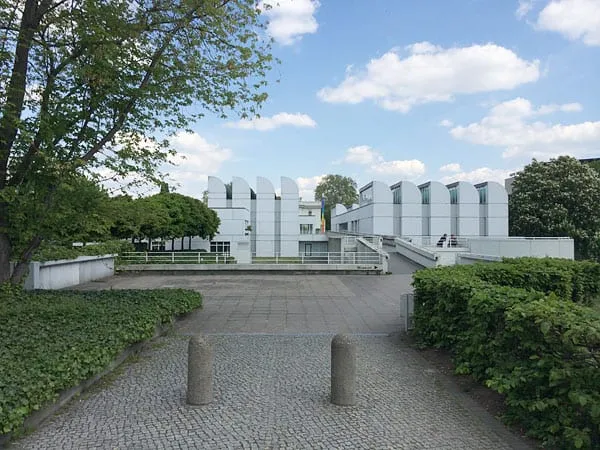
The Bauhaus Archive ( German : Bauhaus-Archiv) Museum of Design , in Berlin , documents the history of the Bauhaus school from 1929-1933. The school was founded by Water Gropius and many great 20th century architects and artists taught and studied there, including Paul Klee, Mies Van der Rohe, Wassliy Kandinsky and Laszlo Moholy-Nagy.
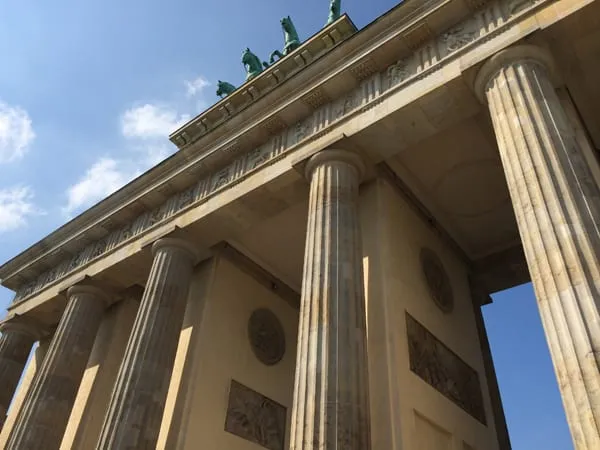
The Brandenburg Gate ( German : Brandenburger Tor) is a former city gate , rebuilt in the late 18th century as a neoclassical triumphal arch, and now one of the most well-known landmarks of Germany. The gate was damaged during the fighting in WWII and then was inaccessible next to the Berlin wall until 1989 when East and West Germany were reunited. If you look carefully you can see the bullet holes (now repaired) from the war. You find this in many older buildings in Berlin.
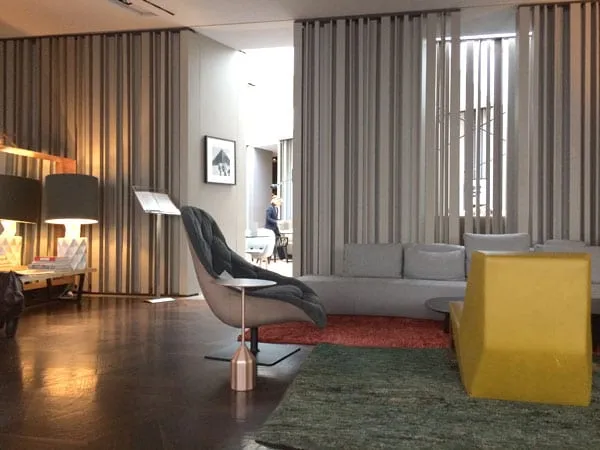
The interior lobby of the hotel Das Stue, Located in the former Spanish Embassy in the diplomatic section of Berlin, this luxury boutique hotel was envisioned by noted Italian designer Patricia Urquiola. The detail is quite beautiful and we were very inspired by the architectural expression of this space and how it integrates with the shell of the older building.
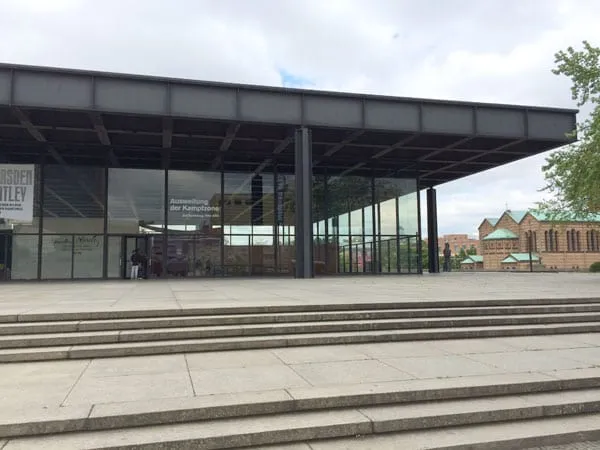
The Neue Nationalgalerie (New National Gallery) at the Kulturforum was the last project designed by Mies Van der Rohe and opened in 1968. As beautiful as the building was we felt that it was also too pure of an architectural form to serve effectively as an art museum. Still, it was a rare treat to see a work by one of the 20th century’s masters.
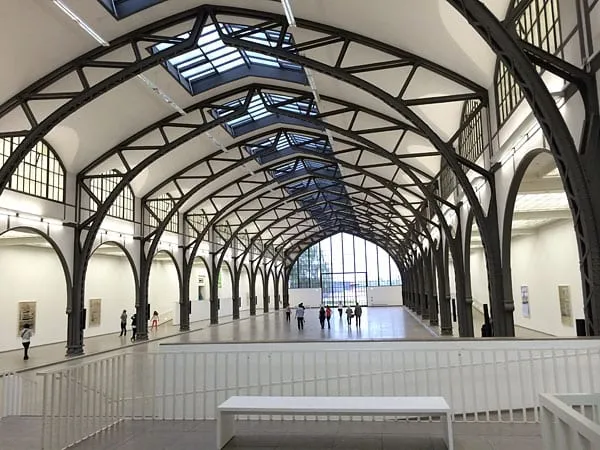
This train station (or Haupbanhof in German) is a beautiful example of early iron truss architecture from the 19th century. Today it is a contemporary art exhibition space.