
Austin’s Leading Green Architect Writes For Roger Beasley
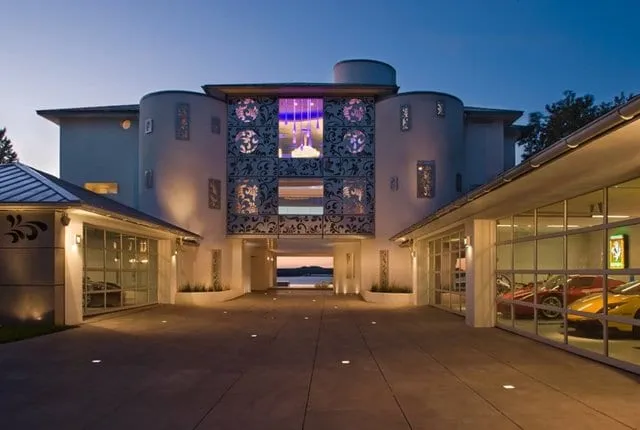
In the November 2010 issue of Roger Beasley e-news, Austin architect Winn Wittman shows how you can green your new or existing home with efficient and sustainable lighting, insulation and rainwater collection. Full text:
“What does it mean to be green? That is a question that could take a whole book not just a newsletter to address. Let’s focus on three areas that are worth considering: lighting, insulation and rainwater collection.
Lighting Lighting is one of the first places we would look at in greening your home. You may have heard compact fluorescent bulbs called “green” because they consume far less energy than incandescents, but how green are they? Fluorescents contain mercury, a hazardous material that causes birth defects, brain damage and is difficult if not impossible to get out of the environment once it gets in. Personally I don’t recommend these bulbs for this reason. They also emit a poor light quality and there are studies that show that their light can actually make people sick who are particularly sensitive to UV light. A much better alternative is a compact LED light such as the unit pictured at below. A lamp like this will last 20 years or more and uses 1/10th the amount of electricity per lumen (unit of illumination) as incandescents. Also important is that it gives off a fraction of the heat of a traditional light bulb, resulting in lower cooling costs. The major barrier to the wholesale adoption of LED lighting is still up-front cost. One of these bulbs can cost $50. Even though it will pay for itself many times over in the course of time. Also, imagine how great it will be to not have to buy or change lightbulbs for 20 years!
Insulation Fiberglass insulation was the standard for many years. Unfortunately, this material is a skin and lung irritant, and it tends to shift, settle and compress over time, becoming less effective. There are better alternatives. My current favorite is soy-based foam insulation. Unlike the first generation of spray foam insulation, this is a natural product which is safer and bio-degradable. Because it expands it will fill voids and is a very good sound insulator. Performance is about 50% better per inch than fiberglass insulators. The next generation of insulation lies in a product called nano-gel. Nano-gel is the lightest substance on earth and the best insulator, and it has been used in a number of high-profile architectural projects. It has the added benefit of being translucent so that walls insulated with this product can also admit daylight.
THIS FEATURE APPEARED IN PRINT. CONTACT THE STUDIO FOR THE FULL ARTICLE.